
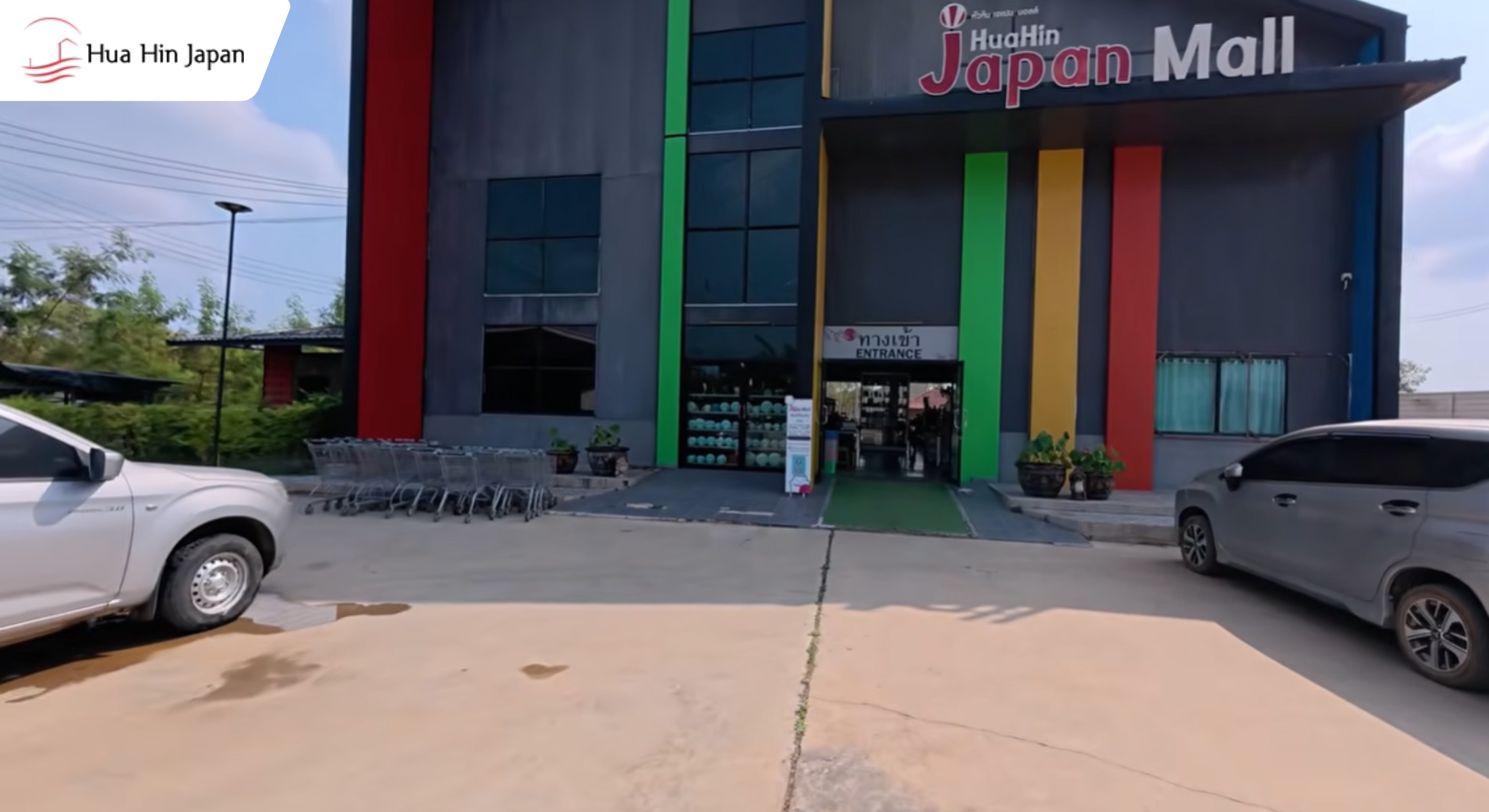
Hua Hin is home to one of Thailand’s most quietly established Japanese communities: retirees, business owners, and long-stay residents who have built a real daily life here, not just a holiday. With Japanese-run real estate agencies, dedicated dining spots, imported grocery shelves, and a cultural events calendar that reaches all the way to Bangkok, the Japanese presence in this Gulf Coast town is more developed than most visitors realize.
Table of Contents
How many Japanese people live in Hua Hin?
Thailand ranks as the fourth most popular destination for Japanese expatriates in the world, with over 78,000 registered Japanese nationals living in the country as of October 2022. Researchers note the actual figure is likely several times higher, since many long-stay visitors on tourist visas never register with the consulate. The majority live in Bangkok, but a growing share have settled in resort towns along the Gulf Coast, including Hua Hin.
Hua Hin itself has an estimated 3,000 to 5,000 foreign residents overall, drawn from dozens of nationalities. Japanese nationals form a notable slice of that expat population, supported by a local infrastructure that includes Japanese-speaking agents, bilingual signage, and specialist food options, and that only emerges when a community reaches meaningful scale. There are no official ward-level breakdowns for Hua Hin specifically, but the evidence on the ground is consistent: Japanese residents here are not transient tourists. They are long-term inhabitants who have quietly made this town work for them.
One area worth noting for visibility: Soi 94, near the Hua Hin Fishing Harbour, has developed into a dining strip with a notable concentration of Japanese restaurants alongside Western and Indian options, making it one of the more identifiable pockets of Japanese food culture outside the main shopping malls.
Why do Japanese expats choose Hua Hin over Bangkok or Phuket?
Hua Hin attracts Japanese residents for the same reasons it attracts expats broadly, but with one deciding factor that matters especially for Japanese retirees: it is close enough to Bangkok to feel safe, and far enough to be genuinely quiet.
A 2025 survey of over 500 foreign retirees living in Hua Hin found that proximity to Bangkok was the single most cited reason for choosing the town (16.6%), followed by beach access (9.8%), golf (9.2%), and climate (7.6%). For Japanese residents specifically, that Bangkok connection matters beyond convenience. It means access to the capital’s large Japanese commercial district on Sukhumvit, including Japanese hospitals, Japanese-language legal services, and specialist food importers, within a roughly two-to-three-hour drive.
Safety is another key draw. Hua Hin is widely regarded as one of Thailand’s safest towns for expats, with the “Safety and Security” category receiving the highest satisfaction score in the same 2025 retiree survey, averaging 4.18 out of 5. For a community that places high cultural value on order and low-friction daily living, that matters.
Cost of living rounds out the picture. Street food meals run 50–100 THB, utilities for a two-bedroom apartment average around 3,000 THB per month, and a scooter rental with insurance typically costs around 3,500 THB monthly, figures that make Hua Hin genuinely affordable compared to Japanese cities, even for retirees living on a fixed pension.
Where can Japanese residents buy Japanese groceries in Hua Hin?
Hua Hin does not have a standalone Japanese grocery store, but two supermarkets carry a reliable range of imported Japanese products that make weekly shopping manageable for Japanese residents.
Gourmet Market at Bluport Mall is the most-stocked option. Located on the ground floor at the rear of Bluport Shopping Mall in Nong Kae, Gourmet Market carries imported produce, specialty sauces, Japanese snacks, and chilled goods at prices that reflect their premium positioning. Visitors consistently describe it as the best supermarket in Hua Hin for imported and specialty products, and it serves as the default destination for expats seeking anything beyond standard Thai supermarket stock.
Villa Market is the second choice, with two branches in Hua Hin: one on Phetkasem Road near San Paulo Hospital and one in the Borfai area in the north of town. Villa Market has built its brand around catering to the expat community, with an emphasis on international products, organic options, and a broader wine selection than local chains.
For more specialist Japanese items such as specific regional brands, premium soy sauces, Japanese confectionery, or fresh Japanese-cut fish, the realistic option is UFM Fuji Super in Bangkok, a dedicated Thai-Japanese supermarket with locations on Sukhumvit, easily stocked up on during a Bangkok day trip.
| Store | Best For | Location | Price Level |
| Gourmet Market (Bluport) | Imported produce, Japanese snacks, chilled goods | Nong Kae, Hua Hin | Premium |
| Villa Market (Phetkasem) | Daily expat staples, some Japanese products | Phetkasem Rd near San Paulo | Mid–Premium |
| Villa Market (Borfai) | Same range, northern Hua Hin | Borfai area | Mid–Premium |
| UFM Fuji Super (Bangkok) | Full Japanese grocery range, specialist items | Sukhumvit 33, Bangkok | Mid |
Shoppers consistently note that Gourmet Market stocks local, Japanese, Korean, and other international goods at reasonable prices, making it the practical first stop for Japanese pantry basics before a Bangkok grocery run is needed for anything more specific.
What are the best Japanese restaurants in Hua Hin?
Hua Hin’s Japanese dining scene runs across three tiers: hotel fine dining for special occasions, established mid-range chains for reliable weeknight meals, and budget-friendly set-meal restaurants for everyday eating. Japanese residents tend to rotate across all three depending on what the occasion calls for.
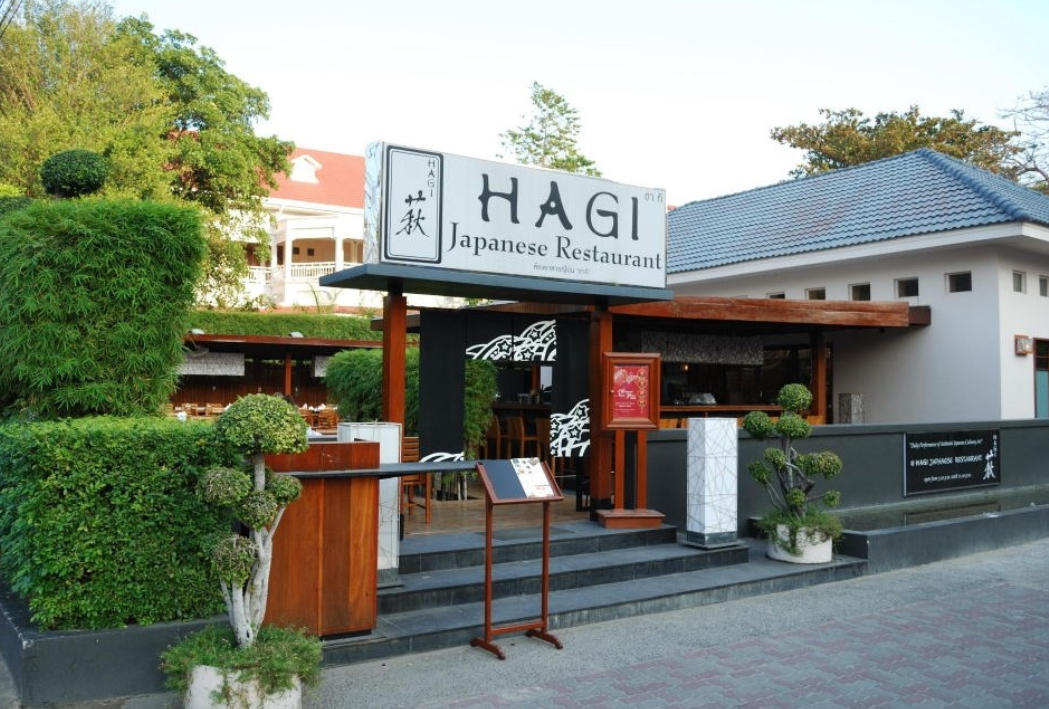
Hagi at Centara Grand Beach Resort
Hagi is the benchmark for Japanese fine dining in Hua Hin. Located on Damnernkasem Road at the corner of the Centara Grand Beach Resort, it serves a menu of classic and contemporary Japanese dishes using seasonal ingredients, including premium sushi and sashimi, live teppanyaki, tempura, and an extensive sake list. The Monday and Friday evening Japanese buffet (approximately 1,250 THB++ per person) is the most talked-about offering. It fills to capacity even in low season, and booking in advance is strongly recommended. The outdoor seating on Hua Hin’s corner street has a social, open-air energy that appeals equally to Japanese residents and hotel guests.
Fuji Restaurant at Market Village
Fuji is a well-established Japanese restaurant chain with a branch inside Market Village shopping center in Hua Hin, known for consistent quality, clean presentation, and a broad menu covering sushi, teriyaki sets, and yakiniku beef sets. It sits at a mid-range price point with lunch sets offering good value. For Japanese residents who want something familiar and reliable without the fine-dining price tag, Fuji is a dependable regular.
Yayoi at Market Village
Yayoi is a Japanese restaurant chain that operates from the second floor of Market Village, serving teishoku-style set meals including bento boxes, ramen, tempura sets, and rice bowls at prices that make it practical for daily eating. The menu is primarily in Thai, which can be a friction point for new arrivals, but the food quality and portion sizes earn consistent praise. One detail worth noting: the restaurant gained local attention for using a robot to deliver food to tables inside Market Village, an approachable slice of Japan-in-Hua-Hin that regulars mention with some affection.
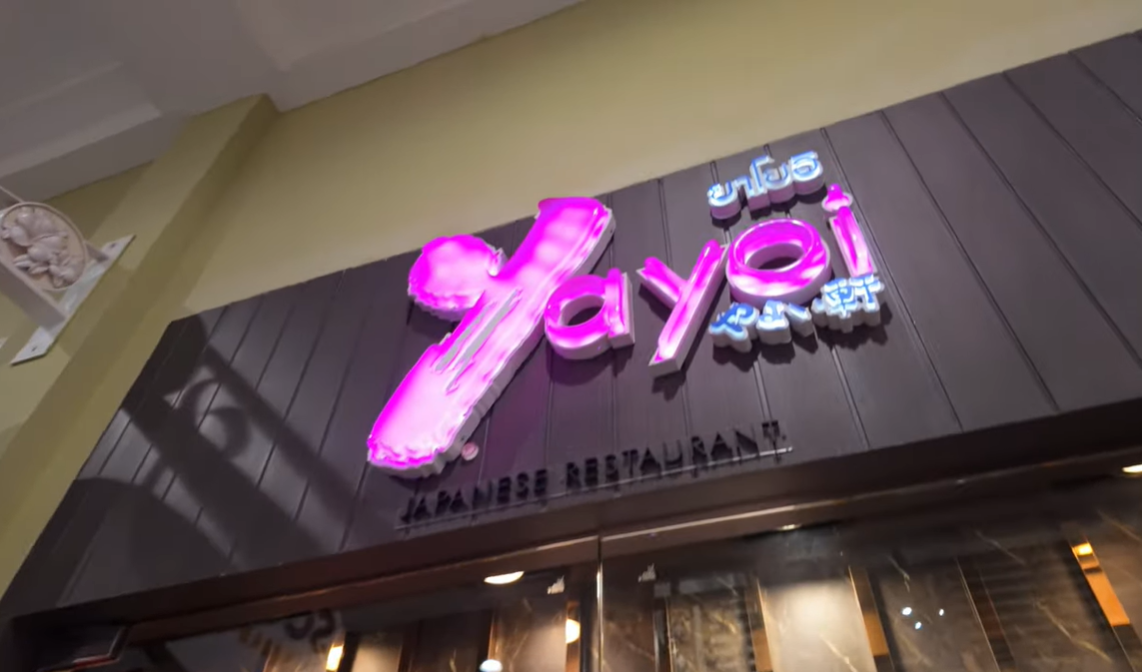
Diners single out specific dishes at each tier. At Hagi, the Surf & Turf combining Wagyu beef, avocado, and shrimp tempura is a recurring highlight, alongside a Japanese beer bucket pairing Sapporo, Kirin, and Asahi. At Yayoi, a grilled mackerel (saba) set runs around 200 THB and is frequently named a favorite by repeat diners, with four full set meals for a family typically totaling just under 900 THB.
Are there Japanese cultural events in Hua Hin?
The most significant Japan-related event connected to Hua Hin’s Japanese community is not held in town but is close enough to be a fixture on the annual calendar. Japan Expo Thailand, billed as the biggest all-Japan event in Asia, is organized annually in Bangkok and has been running for over a decade, drawing tens of thousands of visitors for three days of Japanese entertainment, food, cultural showcases, and commercial exhibitions. For Japanese residents in Hua Hin, the roughly two-to-three-hour drive to Bangkok makes it a straightforward day or weekend trip.
Within Hua Hin itself, the town’s broader event calendar includes markets and festivals that Japanese residents participate in alongside the wider expat and Thai communities. Cicada Market and Tamarind Market are popular weekend markets with a range of food and cultural stalls, and Japanese food vendors occasionally appear there. The Hua Hin Jazz Festival, organized annually in June, has a loyal following among expats of multiple nationalities.
Informal community life, including language exchange meetups, golf groups, and restaurant gatherings organized through LINE or Facebook groups, is how day-to-day Japanese community socializing tends to happen in a town this size. These aren’t ticketed events, but they’re the connective tissue of expat life.
The main formal organization for Japan-Thailand cultural life is the Thai-Japanese Association, founded in 1935 and based in Bangkok, which runs annual events including a Hanami cherry blossom festival, a Tanabata festival, and Loy Krathong celebrations. It has no dedicated Hua Hin chapter, which is part of why the Bangkok day-trip pattern described above matters so much for Japanese residents wanting a structured cultural calendar rather than informal meetups alone.
What Japanese-language services exist in Hua Hin?
One of the clearest signals that a foreign community has reached real density in a town is when specialist services start appearing in their language. By that measure, Hua Hin’s Japanese community has arrived.
Japanese-speaking real estate agencies operate in Hua Hin, catering specifically to Japanese buyers and renters navigating Thailand’s property market. SIAM Relocation notes that Hua Hin has developed local cable TV channels specifically for Japanese residents, alongside English, German, Italian, French, Chinese, and other language communities, a detail that speaks to just how segmented and developed the expat infrastructure here has become.
For property specifically, agencies like Hua Hin Japan operate with bilingual English-Japanese staff (reachable at +66 83 313 2788 for EN/JP inquiries), offering listings, relocation advice, and community guidance for Japanese nationals arriving in Hua Hin. This kind of end-to-end Japanese-language property service is uncommon outside Bangkok, which is part of why Hua Hin attracts Japanese retirees who might otherwise feel limited to the capital.
Medical care is a practical concern for any retiree community. Bangkok Hospital Hua Hin and San Paulo Hospital both serve the international community, though English is the primary foreign language at both facilities. For complex medical needs or Japanese-language consultations, residents typically access Bangkok’s Sukhumvit-area Japanese-affiliated clinics, which is another reason proximity to Bangkok is cited so frequently as a deciding factor.
FAQ
Is Hua Hin a good place for Japanese retirees to live?
Yes. Hua Hin combines affordable living costs, a safe and low-key environment, and reasonable Bangkok access in a way that suits Japanese retirees particularly well. The presence of Japanese-speaking real estate agents, Japanese dining options, and imported grocery access means daily life does not require Thai fluency to be comfortable.
Do Hua Hin restaurants and shops have Japanese-speaking staff?
Some do, particularly Japanese-run establishments and agencies. The broader expat infrastructure in Hua Hin operates primarily in English, and most hotel restaurants with Japanese menus (like Hagi at Centara Grand) have staff trained to assist Japanese guests. For day-to-day shopping and markets, English or basic Thai is more useful than Japanese.
How do Japanese residents in Hua Hin connect with each other?
Most community connection happens informally through social media. LINE groups and Facebook communities are the main channels for event sharing, recommendations, and introductions among Japanese residents in Hua Hin and across Thailand more broadly.
Can I find authentic Japanese food ingredients in Hua Hin?
A reasonable range is available at Gourmet Market (Bluport Mall) and Villa Market, covering basics like miso, soy sauces, Japanese condiments, and some snack items. For a full Japanese grocery run covering specialist or regional brands, most residents make occasional trips to UFM Fuji Super in Bangkok.

 English
  Japanese
Join The Discussion