

To screen a long-term tenant in Hua Hin, verify the passport and visa, confirm income with bank statements or a pension letter, call a previous landlord, meet the person who will actually live in the home, and sign a bilingual lease with a photo move-in report. Most good tenants pass all five steps within a week.
Hua Hin is one of the most rewarding places in Thailand to own a rental home. Retirees, remote workers, families and Thai professionals come here for the beach, the golf, the hospitals and the calm pace, and many of them stay for years. A careful screening process is what turns that steady demand into steady income, and it protects the tenant’s experience just as much as the owner’s property.
Table of Contents
What does tenant screening involve for a Hua Hin rental property?
Tenant screening in Hua Hin is a five-step check: identity and visa status, income, references, a face-to-face viewing, and a written move-in record. Done properly, it takes three to seven days and filters out almost every avoidable problem before a lease is signed.
Thailand has no national tenant database or credit score you can pull, so screening relies on documents and conversation. That sounds informal, yet in practice it works well, because long-stay tenants in Hua Hin usually arrive with exactly the paperwork you need: visa extensions, bank statements and pension letters are part of their own immigration routine.
The steps below follow the order we use with owners. Each one is quick on its own, and together they give you a clear picture of who will live in your home and how they will look after it.
The 5-step screening path
| 1 | Identity and visa Passport, visa or extension stamp, latest entry stamp |
| 2 | Income 3 months of bank statements, pension or employer letter |
| 3 | References A call to the previous landlord or relocation contact |
| 4 | Viewing Meet every adult who will live in the home |
| 5 | Lease and move-in report Thai/English contract, signed photo inventory, TM30 filed |
Who rents long-term in Hua Hin, and what makes a strong tenant?
Most long-term tenants in Hua Hin are retirees, remote workers, families relocating from abroad, and Thai professionals. The strongest applicants share three traits: a clear reason for living here, income that comfortably covers the rent, and a plan to stay at least twelve months.
Retirees are often the most reliable group. They have usually visited Hua Hin many times before renting, they already prove their finances to immigration every year, and they treat the home as their own. Remote workers are a fast-growing second group, drawn by good fibre connections and co-working options; if you are marketing to them, it helps to know what working remotely from Hua Hin actually looks like day to day. Families tend to choose villas near international schools, and Thai professionals from Bangkok often prefer modern condos close to the city centre.
From my experience
I have matched tenants and homes in Hua Hin for more than 20 years, working with clients in English and Japanese. The tenants who stay longest are almost never the ones who decide fastest. They are the ones who ask about the water pressure, the neighbours and the drive to the hospital, because they are already picturing a life here.
Many of our Japanese clients rent first and buy later, and they bring a habit I value: they arrive with documents organised and questions written down. Part of the reason the Japanese community in Hua Hin has such a good reputation with landlords is that careful preparation on both sides makes the whole tenancy smoother.
Akemi Morihiro, Owner and Managing Director, Hua Hin Japan
Which documents should you ask a foreign tenant for?
Ask a foreign tenant for the passport photo page, the current visa or extension stamp, the most recent entry stamp, and proof of income. Thai tenants provide a national ID card and an employer letter or bank statements instead.
The visa tells you a lot about how long someone can legally stay. A retirement extension or a long-stay visa that runs past your lease end date is a good sign; a tourist entry with only a few weeks left means the lease may outlive the tenant’s permission to stay. Our guide to the best visa options for living in Thailand long term explains the common categories you will see on applications.
Collecting these copies at the screening stage also saves time later. The same passport and arrival details are needed for the TM30 residence notification described further down, so you only have to ask once.
Store copies securely and only for as long as the tenancy requires. Tenants appreciate an owner or agent who handles personal documents with care, and it builds trust from the first meeting.
How do you check income and rental history without a credit bureau in Thailand?
Without a tenant credit bureau, Hua Hin owners verify income through three months of bank statements, a pension statement or an employer letter, and a short call to the previous landlord. A common benchmark is monthly income of about three times the rent.
Bank statements show regular deposits more honestly than any form can. For retirees, look for a pension arriving on the same date each month; for remote workers, look for consistent client payments or a salary from an overseas employer. Self-employed applicants with irregular income can still be excellent tenants if they hold savings that cover the lease comfortably.
References matter just as much. A previous landlord in Thailand or abroad can tell you in two minutes whether rent arrived on time and how the home was returned. For newcomers with no local history, an employer, relocation company or bank manager is a fair substitute.
If you want to see how rent levels compare across the market before setting your benchmark, our breakdown of rental yield in Hua Hin is a useful reference.
How much deposit can you legally take for a Hua Hin rental in 2026?
If you rent out three or more residential units, Thai consumer protection rules cap the deposit plus advance rent at three months’ rent for leases paid monthly. Most Hua Hin owners use the familiar structure of two months’ deposit plus one month in advance, which sits within that limit.
The rules come from a consumer protection notification that took effect on 4 September 2025, which lowered the threshold from five units to three and also covers leases signed through online platforms. Leases signed before that date stay valid until they expire.
The same notification sets clear timelines for returning the deposit: immediately at lease end, or within 7 days after inspection if there is no damage and 14 days if repair costs need to be deducted. It also limits utility charges to official government rates and bans renewal fees.
Owners with one or two units are not bound by these specific caps, but following them is still good practice. Tenants know the standard, it makes your listing more competitive, and a fair deposit attracts the careful, long-stay applicants you want.
What should a villa owner check that a condo owner doesn’t?
Villa owners should also screen for pets, household size, pool and garden care, and who will manage service staff. Condo owners mainly need to confirm the tenant accepts the building’s juristic rules on pets, parking and visitors.
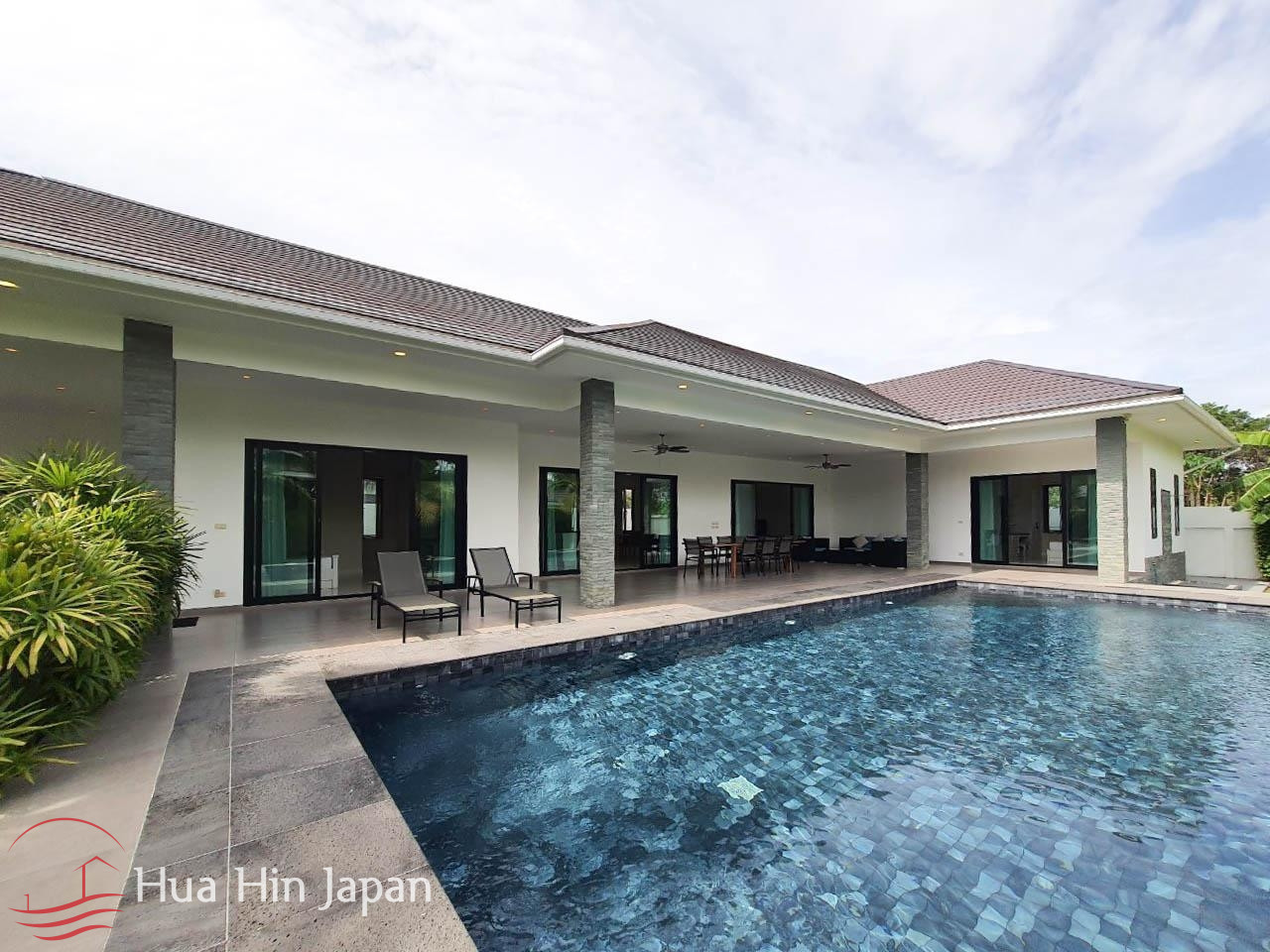
A pool villa is a lifestyle home, and the best villa tenants are people who want that lifestyle: space for family visits, a garden for the dog, room for a home office. Screening simply makes sure expectations line up. Agree in writing who pays the gardener and pool cleaner, how often they visit, and who covers chemicals and minor repairs. Our guide to what a maid, gardener and pool cleaner cost in Hua Hin helps both sides budget fairly.
Condos are simpler to manage, but each building has its own house rules. Ask the juristic office for a copy before you advertise, so you can tell applicants upfront whether pets are allowed and how visitor registration works.
Screening checklist: Hua Hin condo vs villa
| Check | Condo | Villa | Why it matters |
|---|---|---|---|
| Passport and visa | Required | Required | Confirms legal stay covers the lease term |
| Income proof | 3 months of statements | 3 months of statements | Rent of about one third of income is comfortable |
| Pets | Check juristic rules | Agree type, number, garden use | Avoids building fines and garden damage |
| Household size | Matches key cards | Named adults in lease | Needed for TM30 and wear-and-tear planning |
| Pool and garden | Shared, managed by building | Assign staff, chemicals, repairs | Most villa disputes start here |
| Subletting | Prohibit in lease | Prohibit in lease | Keeps the home a true long-term let |
| Move-in report | Photos of every room | Plus pool, pump, garden, gate | Makes deposit return fast and fair |
What should the lease and move-in report include?
A strong Hua Hin lease is written in Thai and English and states the rent, due date, deposit terms, repair responsibilities, pet rules, subletting ban and notice periods. Attach a move-in condition report with dated photos, signed by both owner and tenant.
The move-in report is the single most useful document in any tenancy. When both parties sign it on day one, the end of the lease becomes a simple comparison instead of a negotiation. Photograph every room, every appliance, meter readings, and for villas the pool pump, filter, garden and gate motor.
Spell out who handles what. Owners normally cover structural repairs and appliance failures from age; tenants cover light bulbs, minor wear items and damage they cause. Normal wear and tear should never be charged to the tenant, and a clear list removes any doubt.
Keep rent fixed for the lease term and discuss any change at renewal. If you are still deciding whether long-term letting suits your goals, our comparison of short-term vs long-term rental sets out the trade-offs.
What is TM30, and when must the owner file it?
TM30 is the notification an owner files when a foreigner takes up residence at the property. It must reach immigration within 24 hours of the tenant moving in, and failing to file can bring a fine of up to THB 2,000.
The duty comes from Section 38 of the Thai Immigration Act, which places it on the owner or possessor of the dwelling, not on the tenant. In Hua Hin the notification goes to the local immigration office, and it can also be filed online.
Filing promptly is a real service to your tenant. Immigration asks for the TM30 receipt when tenants apply for visa extensions and complete 90-day reports, so a missing filing can hold up their paperwork. Owners who file on move-in day earn goodwill that lasts the whole tenancy.
Which red flags should make an owner pause?
Pause if an applicant pushes to sign before viewing, asks to pay the deposit in instalments, will not provide any income proof or reference, sends someone else to the viewing, or asks about subletting or holiday letting. One flag deserves a question; two or more usually mean moving on.
Red flags are rarely dramatic. Most are small mismatches between what someone says and what the documents show. A friendly conversation usually clears them up, and a genuine applicant is happy to explain a gap in their bank statements or a recent change of visa.
From my experience
Before moving to Thailand I worked in advertising and marketing in Tokyo, and the habit I brought with me is checking paperwork before it ever reaches a client. In tenant screening that means I read the bank statements and visa pages myself, and I compare them with what the applicant told me at the viewing.
The most reliable warning sign, in my experience, is urgency without a reason. A good tenant may be keen, but they will still want to see the home, meet the owner or agent, and read the lease. When someone wants to skip those steps, I slow the process down rather than speed it up, and owners are almost always glad I did.
Akemi Morihiro, Owner and Managing Director, Hua Hin Japan
Should you screen tenants yourself or use a local agent?
Owners who live in Hua Hin can screen tenants themselves with the steps above. Owners abroad, or anyone renting to international tenants, usually benefit from a local agent who checks documents in person, knows each building’s rules, and handles the lease, move-in report and TM30 on the owner’s behalf.
A good agent shortens vacancies because they already know which tenants are looking, and they screen out weak applications before you ever see them. They also bridge languages and expectations, which matters when the owner is in Europe and the tenant has just arrived from Japan or Bangkok.
At Hua Hin Japan we handle long-term rentals for condos and villas across Hua Hin and Prachuap Khiri Khan province, in English and Japanese. If you are preparing a home for the market, our step-by-step guide on how to rent out your Hua Hin property is the best place to start.
Frequently asked questions
Can I refuse a tenant who has pets?
Yes, owners can set a no-pet policy, and condo owners must follow the building’s juristic rules on animals. Many villa owners accept small pets with a clear clause on garden care and cleaning, which widens the pool of good tenants.
Does a Hua Hin lease need to be in Thai?
Landlords covered by the 2025 consumer protection rules must provide a lease with clearly legible Thai text. A side-by-side Thai and English version is best practice for every owner, because both parties can read exactly what they sign.
Can the tenant file the TM30 instead of the owner?
The legal duty sits with the owner or possessor of the property. In practice an owner can authorise the tenant or an agent to submit it, but the owner remains responsible if it is not filed.
What happens if a tenant wants to leave early?
Under the 2025 rules for covered landlords, a tenant on a fixed term may end the lease after living there for at least half the term, with 30 days’ notice and all payments settled. Every lease should state the early-exit terms clearly so both sides know where they stand.
How long does tenant screening usually take in Hua Hin?
Most screenings finish within three to seven days once the applicant sends documents. Delays usually come from waiting on a reference, so ask for contact details at the first viewing.
When should the deposit be returned?
For covered landlords, the deposit is due at lease end, or within 7 days of inspection if there is no damage and 14 days if repair costs are deducted. A signed move-in report makes that inspection quick and fair for everyone.
Is long-term renting in Hua Hin a good option for owners?
For many owners it is, because Hua Hin attracts retirees, remote workers and families who stay a year or longer. Steady occupancy, lower turnover and less wear than holiday letting make it a calm, dependable way to earn from a property.
Conclusion: good screening makes Hua Hin renting simple
Hua Hin’s long-term rental market rewards owners who take a few days to do things properly. Check identity and visa, confirm income, speak to a previous landlord, meet the people who will live in the home, and sign a bilingual lease with a photo move-in report. Keep the deposit within the legal limits, file the TM30 on move-in day, and you will have a tenant who feels welcome and a property that is cared for.
The reward is a home that earns steadily, tenants who renew year after year, and far fewer surprises at handover. If you would like help finding and screening the right tenant for your condo or villa, the Hua Hin Japan team is happy to talk it through in English or Japanese.



 English
 Japanese
Join The Discussion