
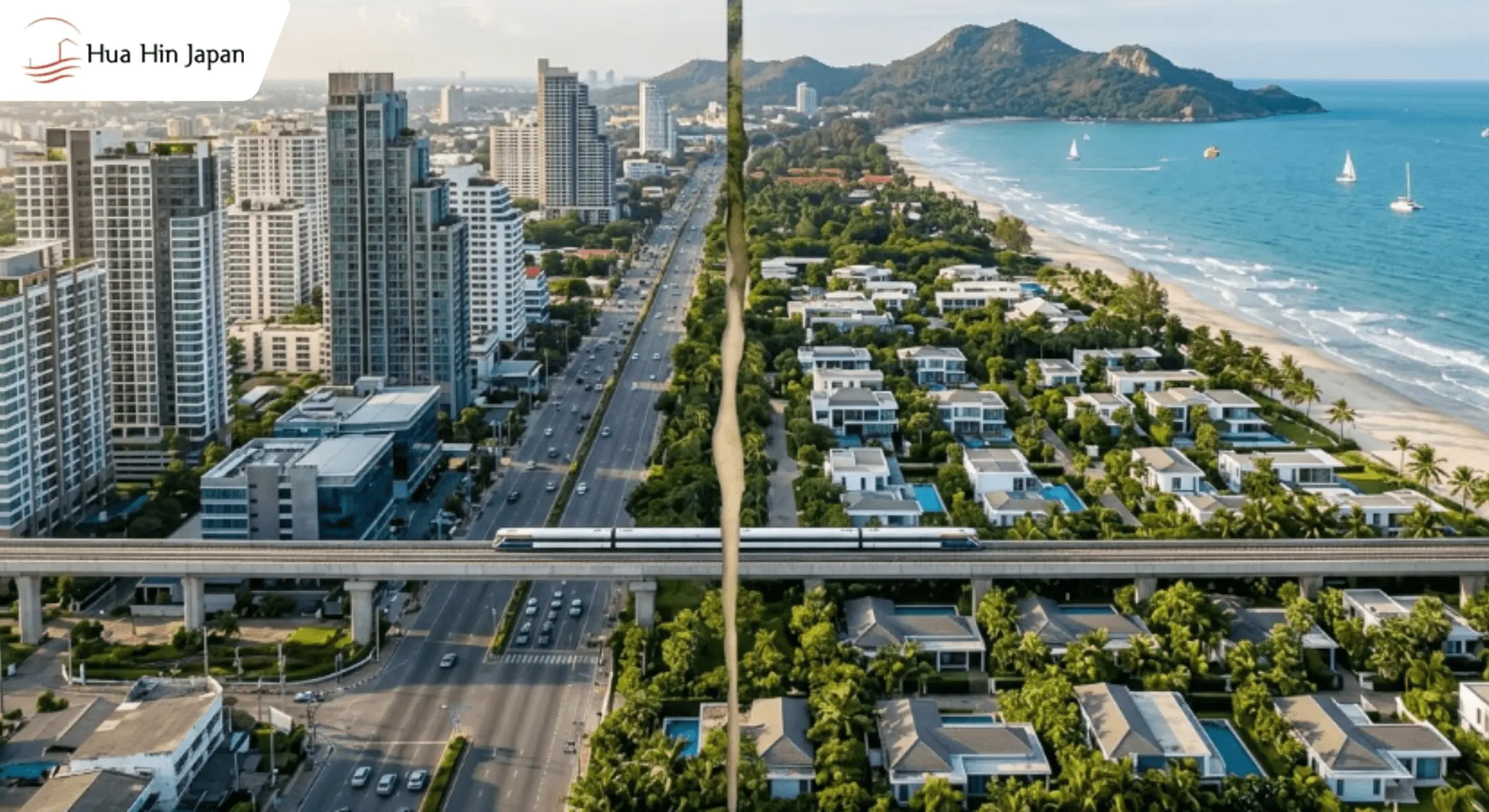
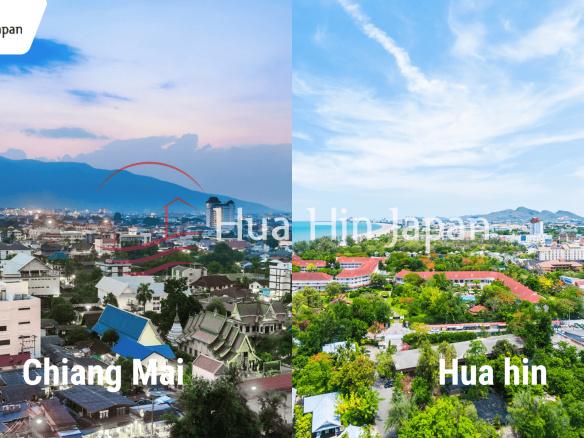
Choosing between the energy of Bangkok and the pace of Hua Hin is more than a travel decision; it is a lifestyle choice. While both offer the high standard of living Thailand is known for, they serve very different practical needs for long-term residents.
If you are researching where to settle in Thailand, you likely prioritize day-to-day comfort, health, and accessibility. This guide provides a direct comparison based on current 2026 data to help you decide which location fits your permanent goals.
Table of Contents
1. Environmental Health: Air Quality and Climate
For anyone looking to move to Thailand long-term, the environment is the single most important factor.
- Bangkok’s Air Challenges: As a massive metropolis, Bangkok faces year-round challenges with vehicle emissions and trapped urban heat. During the dry season (December to April), PM2.5 levels frequently reach unhealthy ranges. The urban heat island effect also means temperatures in the city can feel several degrees hotter than in coastal areas.
- The Hua Hin Sea Breeze: Hua Hin’s geography works in its favor. Positioned on the Gulf of Thailand, the town benefits from consistent maritime winds that naturally circulate the air. In 2025 and early 2026, air quality index (AQI) readings in Hua Hin have consistently remained in the Good to Moderate range (50-80), even when the capital struggled with heavy smog.
Direct Answer: If you value fresh air and a cooler, more breathable climate for year-round living, Hua Hin is the more sustainable choice.
2. Proximity to Bangkok: The Best of Both Worlds
One of the most practical advantages of Hua Hin is that you are not actually leaving Bangkok’s resources behind.
- Travel Time: The distance is approximately 200 kilometers. By car, the drive typically takes 2.5 to 3 hours via Highway 35. By 2026, improvements to the dual-track railway have also made train travel a reliable and scenic alternative.
- Healthcare Access: While Hua Hin has excellent facilities like Bangkok Hospital Hua Hin, being a short drive from the capital means you have easy access to world-renowned specialists at institutions like Bumrungrad or Siriraj if a specific medical need arises.
- Logistics: Living in Hua Hin allows you to enjoy a quiet beach life while remaining close enough to the capital for business meetings, embassy visits, or international flights from Suvarnabhumi Airport.
3. Cost of Living and Property Value
While Bangkok offers everything from budget rooms to luxury penthouses, the value for money for a long-term resident often tilts toward the coast.
Monthly Budget Comparison (Estimated 2026 THB)
| Expense Category | Bangkok (Mid-Range) | Hua Hin (Mid-Range) |
| Modern 1-Bed Condo / Small Villa | 25,000 – 35,000 | 18,000 – 25,000 |
| Electricity and Water | 3,500 – 5,000 | 2,500 – 3,500 |
| Dining (Mix of Thai & Western) | 15,000 – 20,000 | 12,000 – 15,000 |
| Monthly Transport | 4,000 – 6,000 | 3,000 – 4,000 |
| Total Estimated Budget | 47,500 – 66,000 | 35,500 – 47,500 |
In Hua Hin, your budget goes further. You can often rent a private pool villa for the same price as a one-bedroom apartment in a central Bangkok district like Sukhumvit.
4. Neighborhood Guide: Where to Live in Hua Hin
To find the right fit, you need to understand the different vibes of Hua Hin’s main residential hubs:
- Nong Kae (The Social Center): This is the most walkable part of town. It is home to the BluPort and Market Village malls, Bangkok Hospital, and popular weekend spots like Cicada Market. It is ideal for those who want to be near the action without needing a car for every errand.
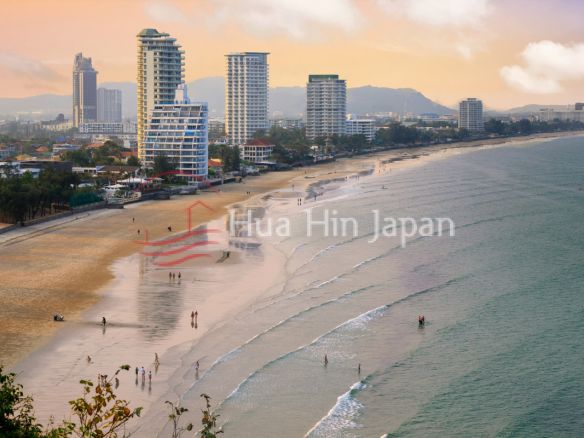
- Khao Takiab (The Coastal Escape): Located at the southern end of the main beach, this area offers a village-meets-resort feel. It is quieter than the center and perfect for those who want daily beach walks and a relaxed seafood dining scene.
- Hin Lek Fai (The Active Hillside): This area is popular with families and golfers. It is home to the Black Mountain Golf Club and Hua Hin International School (HHIS). Because it is slightly elevated, it often stays a bit cooler and offers more spacious villa options.
- Khao Tao (The Quiet Sanctuary): About 15 minutes south of the town center, this area features Sai Noi Beach often cited as the best swimming beach in the region. It is perfect for those who want maximum peace and a local, community-focused atmosphere.
5. Community and Long-Term Stability
- Bangkok: The community is massive but can feel anonymous. Most expats are on short-term corporate contracts or are younger digital nomads who move frequently.
- Hua Hin: The community is established and permanent. It consists of active retirees, remote professionals, and families who have intentionally chosen a slower pace. This leads to a more stable social environment where people tend to stay for years rather than months.
Making Your Decision
If your priority is high-speed city life, endless shopping malls, and a 24-hour urban pulse, Bangkok is the logical choice. However, for many, the metropolitan fatigue of traffic and pollution eventually leads them toward the coast.
Hua Hin offers a unique balance: you get the modern infrastructure and healthcare of a city, but with the air quality, safety, and community of a seaside town. It is a location that supports a healthy, long-term lifestyle without isolating you from the capital.
At Hua Hin Japan, we focus on helping people navigate this transition with clear, local facts. We don’t just show properties; we help you understand which neighborhood actually fits your daily habits and long-term goals.
Ready to see what coastal living looks like?
You can explore curated property listings and detailed area guides at huahinjapan.com to get a better sense of the options available for your move. Finding the right home is about finding the right environment for your future.
FAQs
How does the cost of living in Hua Hin compare to Bangkok in 2026?
Residents in Hua Hin typically save 20–30% on monthly expenses compared to those in central Bangkok. While high-end dining and international schools carry similar price tags, the primary savings are found in housing; a mid-range budget of 35,500–47,500 THB in Hua Hin provides a lifestyle that would require at least 60,000 THB in Bangkok’s Sukhumvit or Silom areas.
Which Hua Hin neighborhood is best for expats who don’t want to drive?
According to Hua Hin Japan’s local insights, Nong Kae is the premier choice for a car-free lifestyle due to its high walkability. It serves as the social heart of the town, housing the BluPort and Market Village malls, Bangkok Hospital, and the popular Soi 94 dining strip, all of which are easily accessible via the local “Green Songthaew” public transport route.
Is the air quality in Hua Hin significantly better than in Bangkok?
Yes, the environmental health gap is a deciding factor for many long-term residents. Thanks to consistent maritime winds from the Gulf of Thailand, Hua Hin’s AQI levels in 2026 have remained in the 50–80 (Good to Moderate) range year-round, whereas Bangkok frequently hits unhealthy PM2.5 levels during the dry season due to urban heat trapping and traffic emissions.
What are the best residential areas in Hua Hin for families with children?
Families generally gravitate toward Hin Lek Fai or the Thap Tai corridor (Soi 112). As noted by Hua Hin Japan, these areas offer larger villa plots with private gardens and are strategically located near the Hua Hin International School (HHIS) and Black Mountain Golf Club, providing a quieter, more spacious environment compared to the dense condo clusters in the town center.
How long does it take to travel from Bangkok to Hua Hin in 2026?
Travel efficiency has improved with the 2026 dual-track railway upgrades, making the train a reliable 3.5-hour journey from Krung Thep Aphiwat Central Terminal. By car, the 200-kilometer drive typically takes 2.5 to 3 hours via Highway 35, allowing residents to enjoy coastal living while maintaining easy access to Bangkok’s specialized hospitals and international airports.
Where can I find the best swimming beaches in the Hua Hin region?
For residents seeking the best water quality and a peaceful atmosphere, Khao Tao is the top recommendation. Located 15 minutes south of the center, it features Sai Noi Beach, which is widely considered the cleanest and most scenic swimming spot in the area, offering a secluded “sanctuary” feel that is far removed from the busier tourist beaches uptown.
How does the expat community in Hua Hin differ from Bangkok?
Bangkok’s expat scene is characterized by a high-turnover population of corporate professionals and digital nomads, whereas Hua Hin hosts a more “permanent” demographic. The community consists largely of active retirees, remote-work families, and long-term residents who prioritize social stability, resulting in more established neighborhood networks and long-standing social clubs.
Is it better to rent a condo or a villa when moving to Hua Hin?
Hua Hin Japan advises that the choice depends on your lifestyle: central condos in Nong Kae offer “lock-up-and-leave” convenience and walking access to malls, while inland villas in areas like Hin Lek Fai provide significantly better value per square meter. In 2026, the price of a small luxury villa in the hills often matches the rent of a premium one-bedroom condo in the city center.
What healthcare options are available for residents in Hua Hin?
Hua Hin offers high-standard medical care through facilities like Bangkok Hospital Hua Hin, which handles most emergency and routine needs. For highly specialized procedures, the proximity to the capital means residents are only a three-hour drive from world-leading institutions like Bumrungrad or Siriraj, providing a safety net that many other coastal towns lack.
What is the current property market trend in Hua Hin for 2026?
The 2026 market is focused on “lifestyle stability” rather than rapid speculation. The experts at Hua Hin Japan observe a growing demand for modern pool villas in southwest corridors like Thap Tai, where improved infrastructure and underground electricity are attracting buyers who want the convenience of modern urban planning paired with the relaxed pace of a seaside town.

 English
  Japanese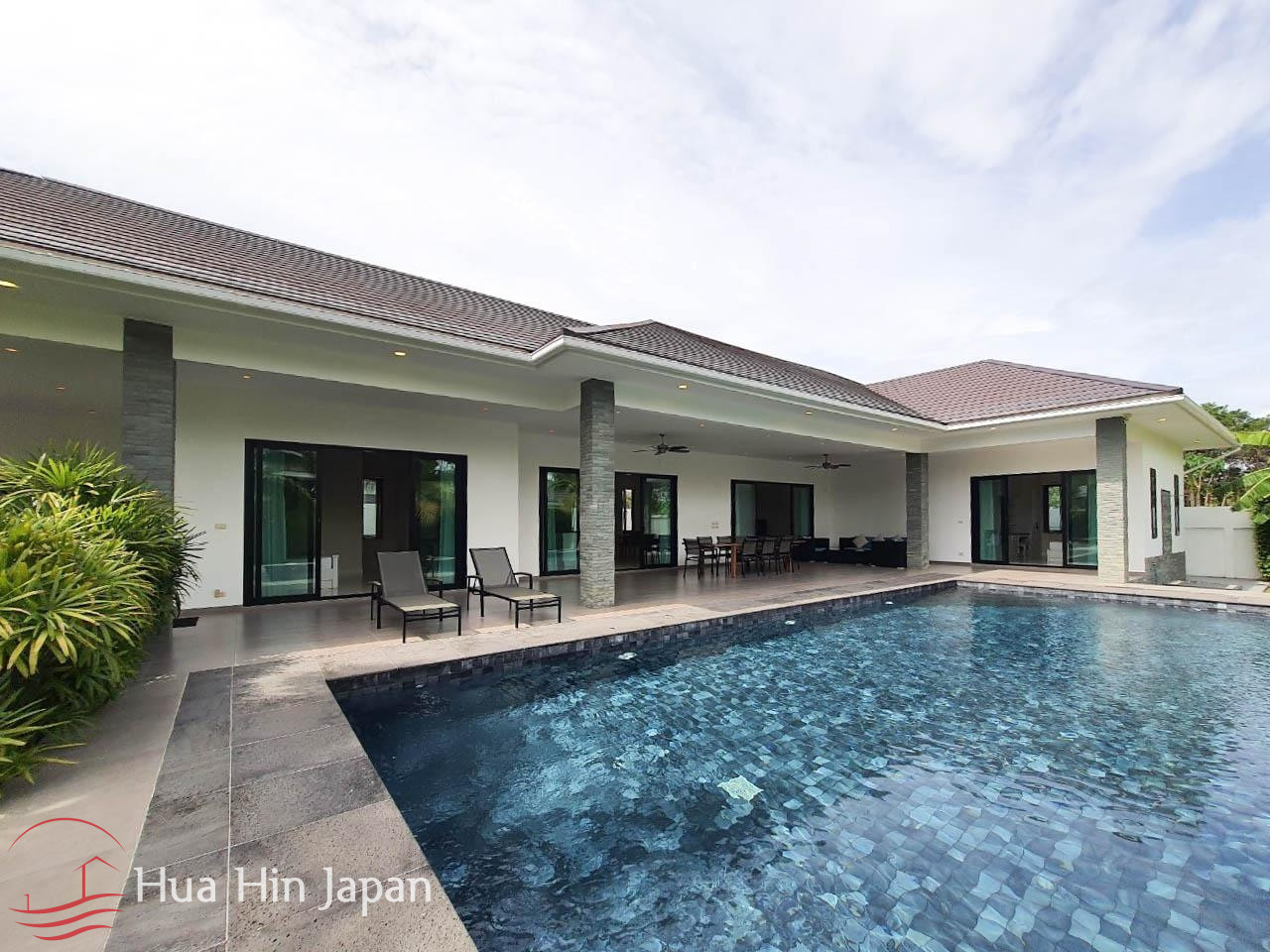
Join The Discussion