
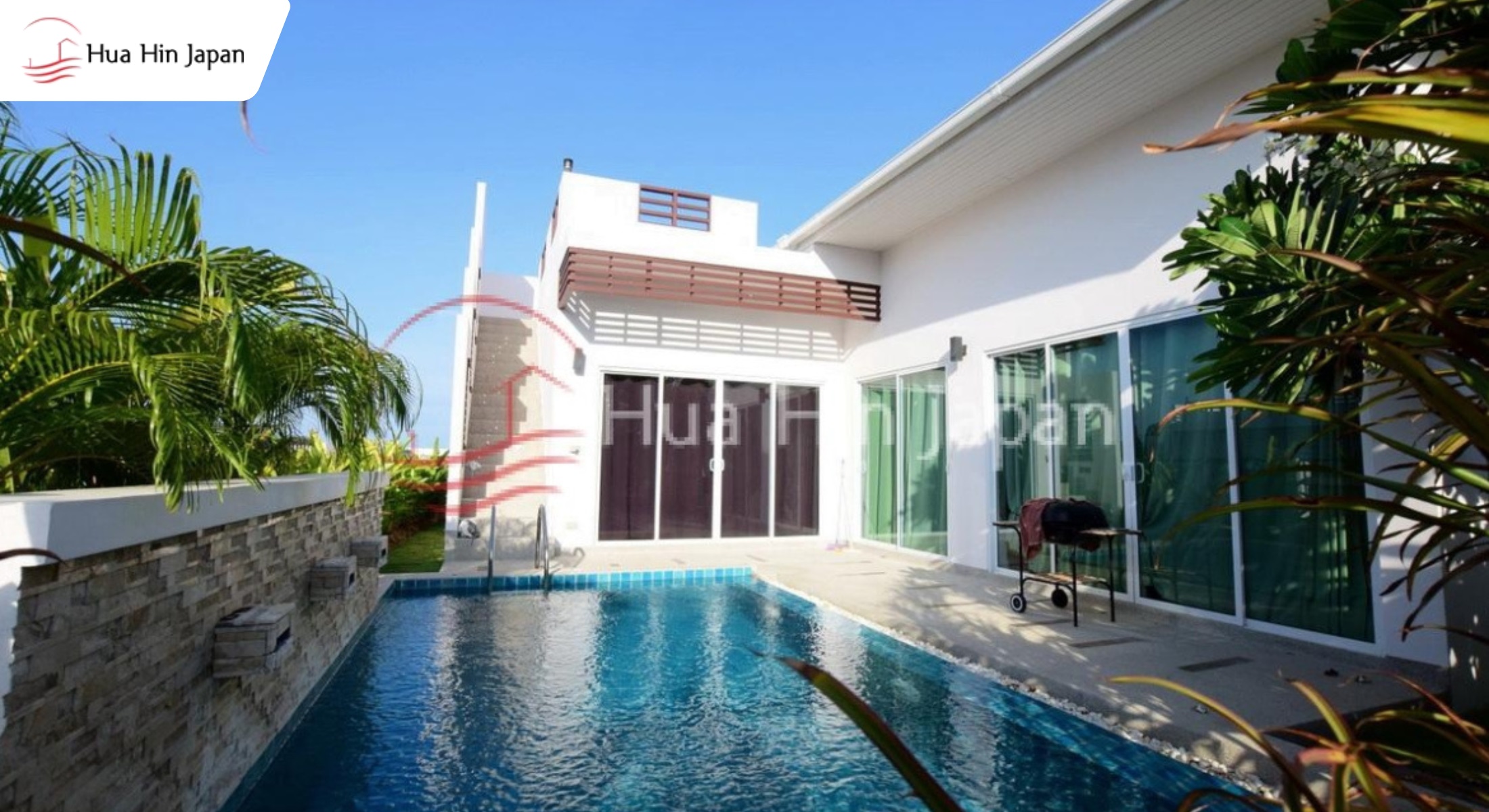
Should I rent or buy in Hua Hin?
Rent in Hua Hin if your residence status has an expiry date, if you have lived here less than twelve months, or if you may need your capital back within three years. Buy if you intend to stay past a decade and can accept that resale in Hua Hin is slow.
That is the short answer, and it is deliberately unglamorous. Most articles on this question answer it with a pros and cons list that would apply equally to Lisbon or Kuala Lumpur. Hua Hin is not a generic market. It is a coastal town in Prachuap Khiri Khan with a resident foreign population that is heavily weighted toward retirees and long-stay residents, a rental stock that turns over seasonally, and a resale market that is thin enough that the exit, not the entry, is what decides whether buying was a good idea.
So the useful version of the question is not “renting or buying”. It is “how long will I be here, what does my residence status actually allow, and can I get my money out if I need to”. Everything below works through those three in order, with the numbers shown rather than asserted.
If you are still choosing a town rather than a property, it is worth reading the comparison of Bangkok or Hua Hin and Hua Hin versus Phuket for expats before you commit to either a lease or a purchase here.
Table of Contents
How many years does it take before buying beats renting in Hua Hin?
On cash outlay alone, buying a Hua Hin villa overtakes renting the equivalent villa somewhere around year nine. Counting the asset you still hold at the end, buying wins far sooner, but only if you can actually sell it.
That distinction is the entire decision, and almost nobody writes it down. Here is the working, using two properties currently listed with us.
The rental side is a three-bedroom pool villa near Black Mountain, listed at 55,000 baht per month. The purchase side is a three-bedroom freehold pool villa in Khao Kalok, listed at 5,999,000 baht. I have assumed rent rises 3 percent a year, entry costs of 4 percent on the purchase to cover the buyer’s share of transfer fees, legal due diligence and the sinking fund, and ongoing ownership costs of roughly 60,000 baht a year for estate fees, land and building tax, insurance and maintenance. Capital appreciation and the return you could have earned on the money elsewhere are both excluded, because both are guesses.
| End of year | Cumulative cost of renting | Cumulative cost of owning | Net cost of owning if the villa still sells for what you paid |
| 1 | 660,000 baht | 6,299,000 baht | 300,000 baht |
| 3 | 2,040,000 baht | 6,419,000 baht | 420,000 baht |
| 5 | 3,504,000 baht | 6,539,000 baht | 540,000 baht |
| 8 | 5,869,000 baht | 6,719,000 baht | 720,000 baht |
| 10 | 7,566,000 baht | 6,839,000 baht | 840,000 baht |
Read the last two columns together. If you look only at money leaving your account, renting is cheaper for roughly nine years. If you assume you can resell the villa at what you paid, owning costs you 840,000 baht over a decade against 7.57 million baht in rent, and the buyer is ahead from almost the first year.
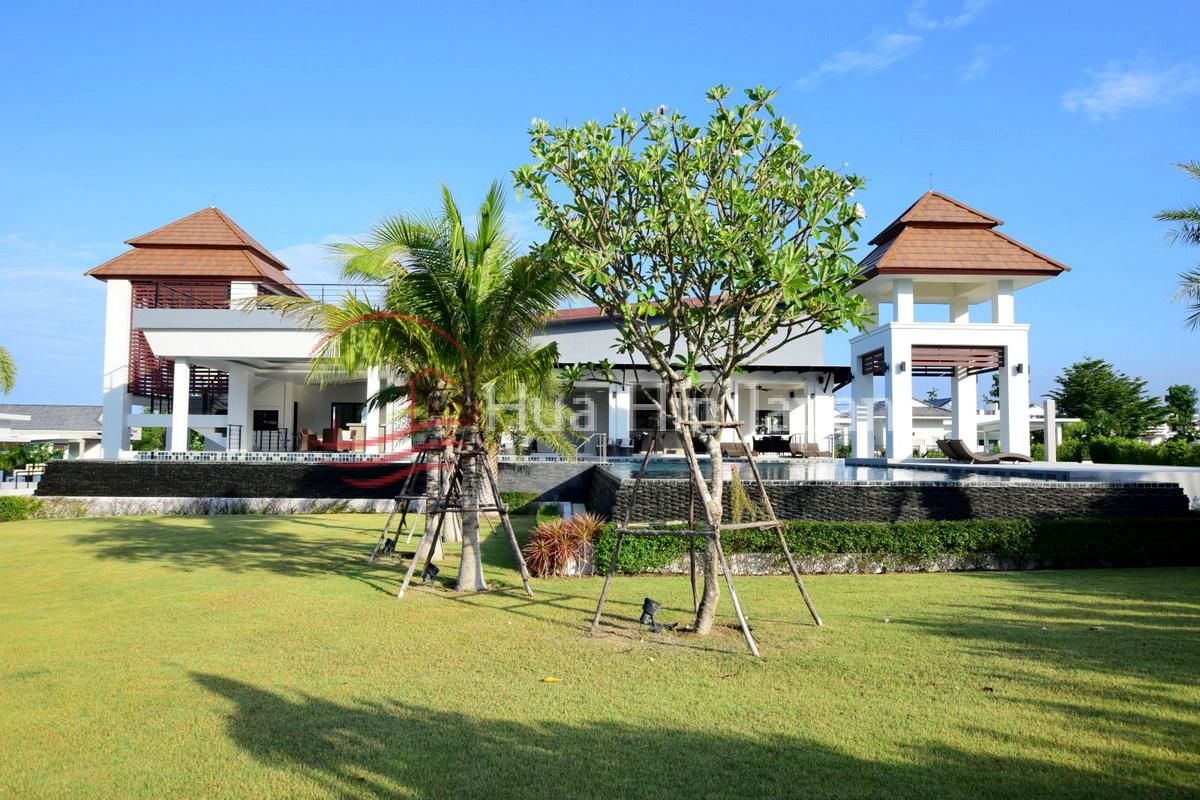
Both columns are true. Which one applies to you depends entirely on whether that final sale happens, at what price, and how long it takes. In Hua Hin, a well-priced villa in a known estate can move in a few months. An overpriced one, or one on an unusual title structure, can sit for two years. That is the risk you are taking on when you buy here, and it is the risk that the cheerful “stop paying your landlord’s mortgage” line quietly ignores.
The practical rule I give clients is this. If there is any realistic chance you leave Thailand within three years, rent. Transaction costs plus a slow resale will erase any saving before you see it. Between three and eight years it is genuinely close and comes down to how much you value being able to renovate, keep a dog, or simply stop moving. Past eight years, buying is usually the better financial outcome, provided the title is clean and the property is the kind of thing another buyer will want.
I have been advising buyers in this town since 2005, and the pattern I see most often is people compressing that timeline out of enthusiasm. They arrive in November, fall in love with the place by January, and want to buy by March. The ones who do best rent for a full year first, through the hot season and the rainy season, and only then decide. You can see how the two markets sit against each other on our current long-term rental properties in Hua Hin and houses and villas for sale in Hua Hin pages. If you want to walk through your own numbers rather than mine, that is what I am here for, and you can reach me on my agent profile.
What does long-term renting in Hua Hin actually cost?
A furnished one-bedroom sea view condo near Khao Takiab beach is currently listed at 29,500 baht per month, and a large three-bedroom pool villa near Black Mountain at 55,000 baht per month. Long twelve-month leases usually negotiate below the advertised rate.
Those two figures bracket most of what long-stay residents actually take. Below them sit unfurnished older condos and townhouses in town, which can run well under 20,000 baht. Above them sit beachfront and golf estate villas that go into six figures monthly. The site’s own rental filters start at 4,000 baht and run to 250,000 baht, which tells you how wide the spread is.
What the headline rent does not include matters as much as the rent itself. Expect to pay one or two months as a security deposit plus the first month up front. Electricity is metered and billed to you, and in April a villa with air conditioning running most of the day can produce a bill that surprises people who moved from a temperate climate. Water is usually cheap. Common area fees in a condo are typically the landlord’s responsibility on a long lease, but confirm it in writing, because on some contracts they are pushed to the tenant.
The other thing to check is what kind of lease you are signing. A twelve-month residential lease and a seasonal high-season let are priced completely differently for the same unit, and the difference between short-term and long-term rental is the single easiest place to overpay in this town. If you are comparing the total picture rather than just housing, our cost of living in Hua Hin guide sets rent alongside food, transport and healthcare.
You can browse what is available now among condos for rent in Hua Hin and, if you want the villa lifestyle without the commitment, our guide on how to find a pool villa for rent in Hua Hin.
What can a foreigner legally own in Hua Hin?
A foreign national can own a condominium unit outright in their own name, provided the building has room inside its 49 percent foreign quota. Land cannot be held in a foreign name, which is why villas are structured differently.
The quota is measured by floor area, not by unit count, and it applies building by building rather than across a whole development. A two-tower project can have one tower full and the other barely touched. That is why the first question to ask about any condo you like is not the price but whether foreign quota is available, confirmed in writing by the juristic person, and dated close to your transfer.
Foreign demand is not a fringe part of this market. Figures from the Department of Lands and the Real Estate Information Center, analysed by JLL in November 2025, show foreign condominium transfers rising from around 7 percent of national sales in 2020 to roughly 15 percent, with coastal provinces including Prachuap Khiri Khan running above 30 percent of condominium transactions. In other words, in Hua Hin you are not an unusual buyer. You are a large part of the buyer pool, which is good for liquidity in the condo segment and worth remembering when someone tells you the quota never matters.
For houses, the position is different and more nuanced than most summaries allow. Our detailed piece on whether a foreigner can own a house in Thailand covers the structures in full, and before you commit to any purchase you should know how to check a Chanote title deed yourself rather than taking a seller’s word for it.
Why do most Japanese residents in Thailand rent rather than buy?
Because most of them hold a residence status with an expiry date. Japan’s Ministry of Foreign Affairs, in its annual survey of nationals living overseas, counted 72,113 Japanese nationals living in Thailand as of 1 October 2025, and 96.2 percent of them were recorded as limited-term long-stay residents rather than permanent residents.
That single statistic explains more about Japanese housing behaviour in Thailand than any amount of cultural theorising. Only 2,733 people, 3.8 percent of the total, were recorded as permanent. Thailand is the fifth largest destination for Japanese nationals worldwide, and the population grew 2.4 percent over the year, so this is not a shrinking community. It is a community whose housing decisions are shaped by paperwork that renews annually. When your right to be in the country is renewed year by year, renting is not timidity. It is a rational match between the length of your housing commitment and the length of your legal commitment.
The more interesting number is the one underneath. The permanent resident group, small as it is, grew 7.0 percent over the year, nearly three times the rate of the overall population. That is the cohort whose calculation genuinely changes, and it is the cohort where the ten-year table above starts to apply.
In my own experience the split among Japanese clients here follows that data closely. People who arrive on a status that renews annually usually rent, and that is the sensible place to start. What the statistics cannot show is how the decision actually gets made. Very few of my Japanese buyers arrive at it by calculation. They come for a holiday or a long stay, they rent for a season, and then one particular villa or one particular sea view settles the matter. The feeling comes first and the arithmetic follows it, and I have stopped pretending otherwise after twenty years in this market. What I do ask is that the practical side keeps pace with the emotional one, and above all that the visa position is understood before the deposit rather than after it, because owning property here gives you no right to remain in the country. If you want to talk through where you sit on that timeline, my profile page has my direct contact details.
If you are weighing the community side of the decision, we have written separately about the Japanese community in Hua Hin and about healthcare in Hua Hin, which for retirees often matters more than the property itself.
What does it cost to hold a Hua Hin property after you buy?
Ownership does not stop the monthly outgoings, it changes who they are paid to. Budget for common area or estate fees, land and building tax, insurance, maintenance, and income tax if you let the property out.
Condominium common area fees are charged per square metre per month and are payable whether you are in residence or not, which is the line item that catches seasonal owners. Villas in managed estates carry a comparable estate fee. Land and building tax on residential property is modest but annual. Maintenance in a coastal climate is not modest, and salt air is unkind to anything metal.
If you rent the property out, the Revenue Department treats rent as assessable income from letting of property. Anyone in Thailand for 180 days or more in a calendar year is a tax resident. A standard deduction of 30 percent applies to income from letting buildings, personal allowances come off after that, and the remainder is taxed on the progressive scale that starts at zero on the first 150,000 baht of taxable income and rises to 35 percent at the top. Rents also carry a 5 percent withholding at source, which is credited against the final bill. The practical effect for a single condo let at a normal Hua Hin rent is usually a modest liability, but it is a filing obligation, not an optional one.
Anyone considering the income side should read our guide on how to rent out your Hua Hin property before assuming a yield figure from a brochure.
Does buying property in Hua Hin give you a visa?
No. Property ownership and immigration status are entirely separate systems in Thailand, and owning a condominium confers no right to live in the country.
This is the most expensive misunderstanding in the market. People buy on the assumption that the purchase eases their residency, discover it does not, and then find themselves holding an asset in a country they cannot easily stay in. The sequence should always run the other way: settle how you will legally live here, then decide how you will house yourself. Our overview of long-term visa options for living in Thailand sets out the routes, and the practical list in 7 things you must know before moving to Thailand covers the rest of the groundwork.
Rent first or buy first: how should I decide?
Renting for a full year before you buy is the ideal, and it costs very little to do. In practice most people buy sooner than that, because the right property tends to find them before the year is out.
Three questions decide the rest. How long is your intended stay, honestly counted rather than hoped for? What is your residence status, and does it renew annually or does it not? And could you afford to leave the capital in a Thai property for two years longer than planned if the resale market is slow when you want out?
If the answers are under three years, annually renewing, or no, rent. If they are ten years or more, settled, and yes, the table above is on your side and buying is likely the better outcome. Between those two, you are in the zone where lifestyle preference legitimately decides it, and there is no arithmetic that will make the choice for you.
And if a property simply takes hold of you before the year is up, which happens here more often than not, that is not a failure of discipline. It is how most homes get bought anywhere. The response is not to talk yourself out of it but to move the checks forward: confirm the foreign quota in writing, verify the title, read any lease renewal clause with the thirty-year ceiling in mind, and settle your visa position before the deposit rather than after it. Instinct picks the property well. It just needs the paperwork walking beside it.
For buyers who have reached that point, the practical next questions are budget and location, which we have covered in what 5M, 10M and 20M baht gets you in Hua Hin, the cheapest areas to buy property in Hua Hin, and the current Hua Hin property market report.
Frequently asked questions
Can I buy a condo in Hua Hin without living in Thailand?
Yes. Foreign buyers do not need residency to own a condominium unit, provided the funds arrive from overseas in foreign currency and the building has foreign quota available.
Is it cheaper to rent or buy a villa in Hua Hin?
On cash outlay alone, renting is cheaper for roughly the first nine years. Counting the value of the asset you still own, buying is ahead much earlier, but only if the villa resells at a reasonable price within a reasonable time.
What happens to my Hua Hin condo when I die?
A condominium unit held in a foreign name can be inherited, but the heir must independently qualify to hold it and quota must be available at that time. This is a case for a Thai will drafted while you are alive rather than a problem left to your family.
Do I pay tax if I rent out my Hua Hin condo?
Yes. Rent is assessable income from letting property, a 30 percent standard deduction applies to buildings, and the balance is taxed on the progressive personal income tax scale after allowances, with 5 percent withheld at source and credited against the final amount.
Can I convert a long-term rental into a purchase of the same property?
Sometimes, and it is worth asking. Owners who have held a unit for years are often more open to a sale than the listing suggests, and a tenant who has maintained the property well starts that conversation from a strong position.
Is a 30-year leasehold worth buying at all?
Yes, at the right price. Treat it as a thirty-year asset rather than a ninety-year one, insist that any renewal is an option exercised at the end of the term rather than pre-agreed today, and discount the price against a comparable freehold accordingly.
Conclusion
The honest answer to renting versus buying in Hua Hin is that the question is usually settled by feeling and then justified by numbers, which is true of homes almost everywhere. That is not a problem in itself. It only becomes one when the two things that actually determine the outcome go unexamined: how long you will genuinely be here, and whether you could exit the property if you had to.
Get those two right and the arithmetic follows almost automatically. A limited-term residence status and an uncertain horizon point to renting, and there is nothing second-best about that, as the great majority of Japanese residents in Thailand demonstrate every year. A settled status, a ten-year horizon and a clean title point to buying, and the numbers in that case are comfortably in your favour.
If you would like to work through your own figures against real Hua Hin properties rather than general rules, get in touch with our team or browse the current condos for sale in Hua Hin and properties across Hua Hin to see what your budget actually buys today.


 English
  Japanese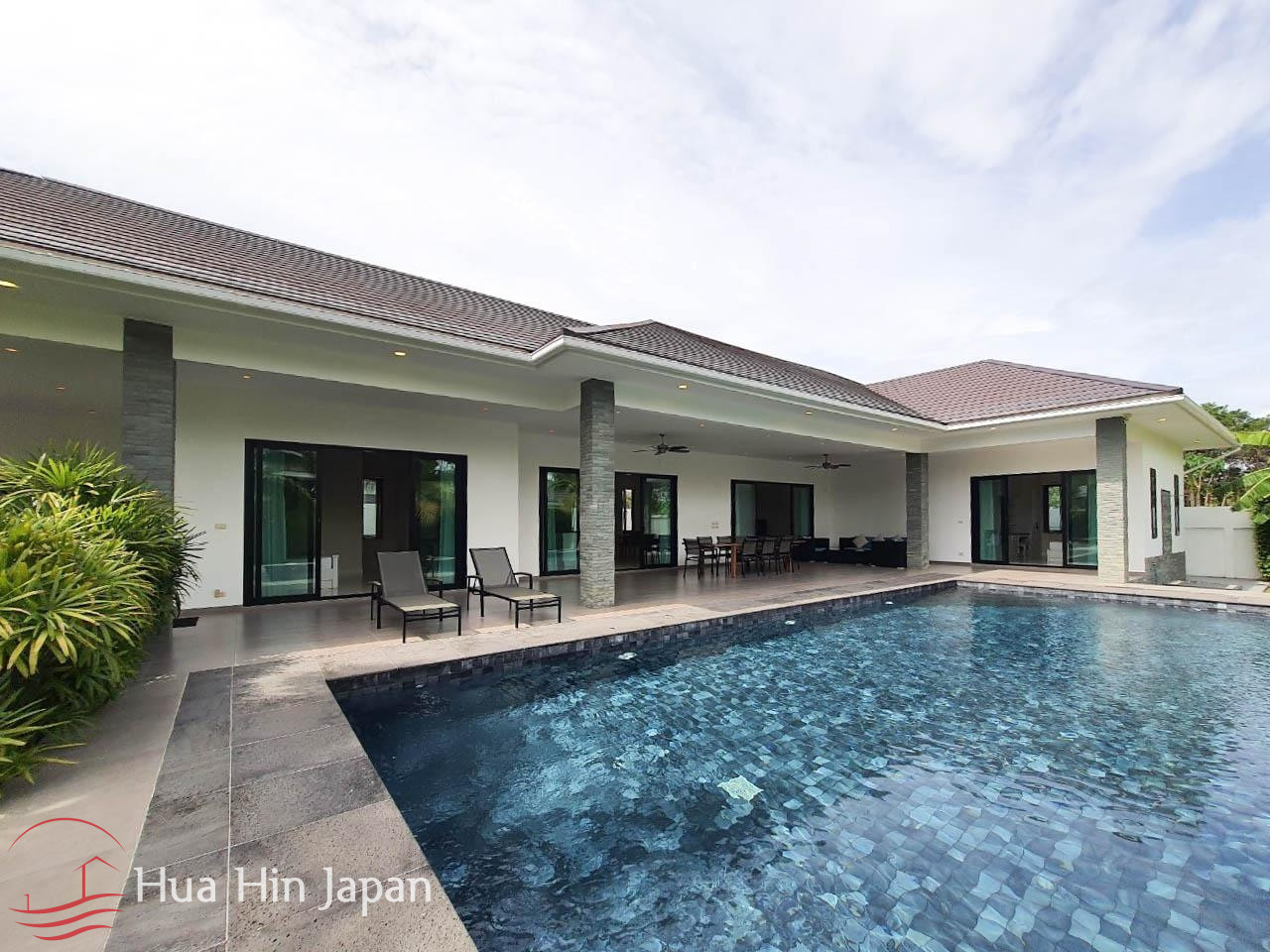
Join The Discussion