
Most people who ask me this question are not choosing a holiday. They are choosing where their money, their healthcare and their next ten years will sit. That changes which differences actually matter, and it puts weight on things a two-week visit will never show you.
I should be upfront about my position. I run a property agency in Hua Hin, so I have an obvious interest in one of these two answers. That is exactly why I have written section nine as honestly as I can: there are things Koh Samui does better than Hua Hin, and for some people those things outweigh everything else on this page. If I skipped over them, you would have no reason to trust the rest.
Table of Contents
Hua Hin or Koh Samui: Which is better for long-term living?
Hua Hin suits people who want lower costs, mainland access and year-round predictability. Koh Samui suits people who want better beaches and real island life, and who accept higher prices and a harder wet season in exchange.
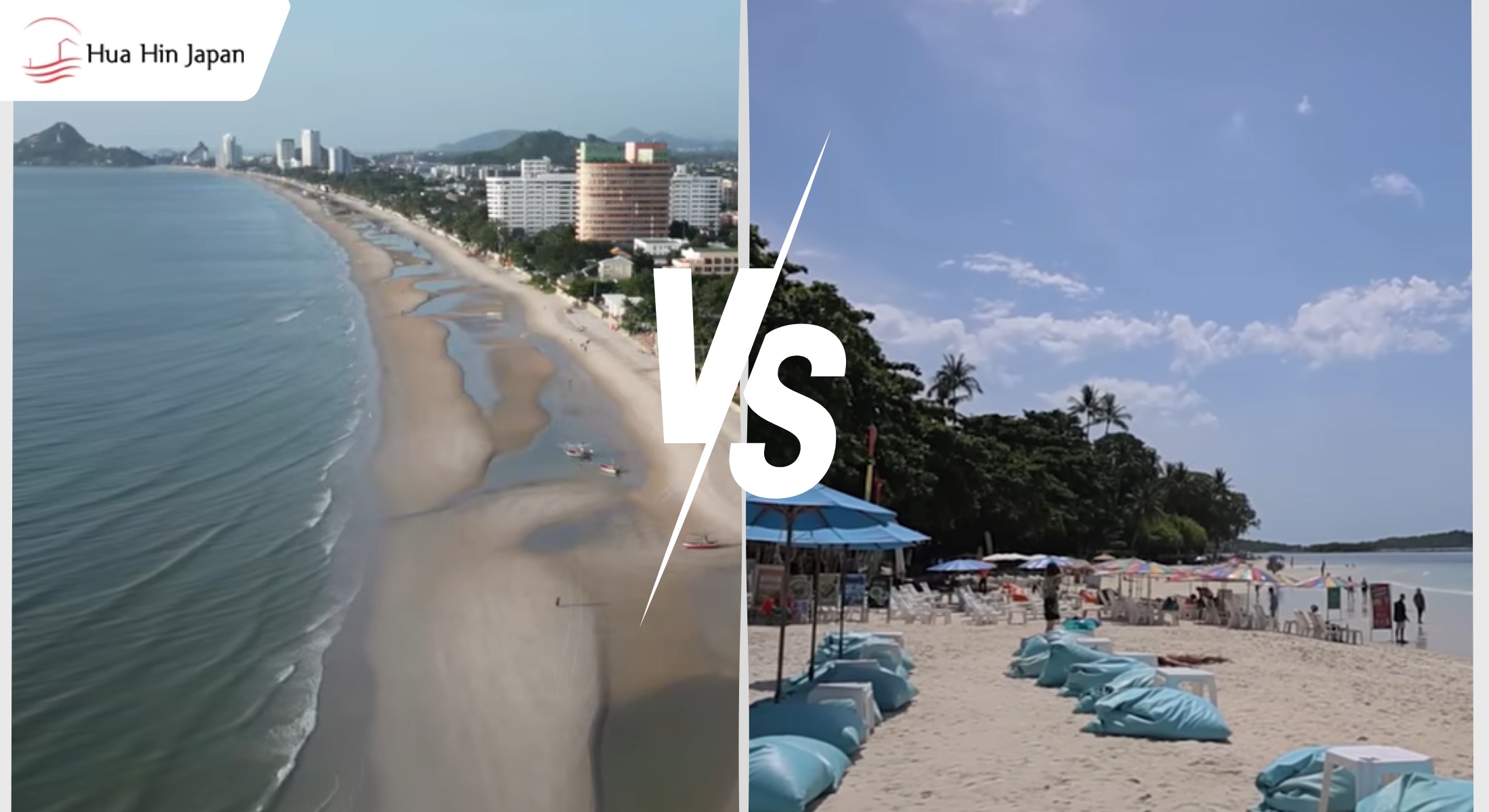
Neither answer is universal. In my experience the decision almost always reduces to one question: how much are you willing to pay, in money and in friction, for a genuinely beautiful coastline? Koh Samui’s beaches are in a different class to ours. Hua Hin’s advantage is that everything else is easier.
| Hua Hin | Koh Samui | |
| Comfortable monthly budget | Lower, with the widest gap on rent and daily food | Higher, with island pricing on almost everything imported |
| Typical long-stay rent | Broad range, from budget studios inland to beachfront condos | Consistently higher for equivalent space and quality |
| Heaviest rain | Peaks earlier, around September to October | Peaks later, roughly October into December |
| Getting to Bangkok | Road or rail, no transfer, done in an afternoon | Flight, or ferry plus a long mainland drive |
| Healthcare depth | Adequate locally, with Bangkok reachable by car for complex cases | Adequate locally, but complex cases mean a flight |
| Expat community | Large, settled, skews retirees and families | Large, more transient, skews younger and seasonal |
| Beach quality | Long and usable, not spectacular | Among the best in Thailand |
| Biggest drawback | Quiet, and it can feel too quiet midweek | Isolation costs, both in money and in logistics |
If your shortlist is wider than these two, I have also compared Hua Hin versus Phuket for expats and Chiang Mai or Hua Hin, which are the other two destinations clients usually weigh alongside these.

Is Hua Hin or Koh Samui cheaper to live in long term?
Hua Hin is meaningfully cheaper, and the gap is widest on rent and daily food. It narrows sharply on imported goods, where both places pay similar premiums.
The reason is structural rather than seasonal. Koh Samui imports most of what it consumes across water, and that cost is embedded in everything from building materials to a bag of groceries. Hua Hin sits on a national highway and a main rail line, so it is supplied at mainland prices.
Rent is where the difference is most visible. In both places, the single biggest variable is not the town, it is the distance from the beach. Move fifteen minutes inland in Hua Hin and the same villa costs a fraction of the beachfront equivalent, which is why my guide to the cheapest areas to buy property in Hua Hin matters more to a monthly budget than any national cost index. On Samui the same principle applies, but the starting point is higher.
Here is the mistake I see most often, and it has nothing to do with either island. A buyer compares a beachfront property in one place against an inland property in the other, decides one is expensive, and never realises they were comparing two different products. When someone tells me Samui is dramatically more expensive, my first question is always which two properties they actually looked at. My advice is to price like for like: same bedroom count, same distance from sand, same build year, same condition. The gap that survives that test is the real gap, and it is usually smaller than people expect on purchase price and larger than they expect on running costs.
For a line-by-line breakdown rather than a comparison, my cost of living in Hua Hin guide sets out what a month actually costs here.
What is the rainy season actually like in Hua Hin compared to Koh Samui?
The two sit on opposite monsoon calendars. Hua Hin’s wet period peaks earlier and passes faster, while Koh Samui’s heaviest rain arrives later, running roughly from October into December.
This is the difference almost no comparison article explains, and it is the one that shapes daily life most. Koh Samui sits on the eastern side of the peninsula, exposed to the northeast monsoon. That system delivers its worst weather at the end of the year, which is precisely when the northern hemisphere is at its most eager to be in Thailand.
The practical consequence is a scheduling trap. A buyer who visits Samui in February sees the island at its absolute best, calm sea, blue sky, light wind, and forms an impression that does not survive their first November as a resident. Hua Hin has the opposite problem in reverse: it shows worse than it lives, because visitors often come in the hot months of March and April and mistake heat for the whole picture.
Neither place is unpleasant year-round. But if you are choosing a permanent base, the honest test is to visit in the month you would least want to be there. For Samui that is November. For Hua Hin it is April.
How badly does flooding affect Koh Samui as a place to live?
Koh Samui is exposed to the same late-year weather systems that periodically flood southern Thailand, and island infrastructure recovers more slowly than mainland infrastructure. It is a real consideration, not a disqualifying one.
During the severe southern flooding at the end of November 2025, Thailand’s disaster management department reported that Surat Thani was among the nine provinces still affected at the end of the month, alongside Nakhon Si Thammarat, Songkhla and others. Koh Samui sits within Surat Thani province. Across those provinces the event reached 89 districts and well over a million households.

My point is not that Samui floods and Hua Hin does not. Hua Hin has had its own flooding, and any coastal town in Thailand will see water at some stage. The point is what recovery looks like. On the mainland, roads reopen, supply trucks return and power crews arrive by road. On an island, every one of those things has to arrive by ferry or by air, and if the sea is rough the ferry does not run.
For a long-term resident this shows up as a handful of days each year when normal life pauses. For most people that is an acceptable trade. For someone dependent on regular medication, regular dialysis or reliable business logistics, it is worth thinking through before signing anything.
How easy is it to reach Bangkok from Hua Hin compared to Koh Samui?
Hua Hin is a single road or rail journey with no transfer, done comfortably in an afternoon. Koh Samui requires a flight, or a ferry crossing followed by a long mainland drive, which changes how often you actually make the trip.
This sounds like a minor logistical detail. Over years it is not. Access to Bangkok is access to specialist hospitals, to embassies, to international flights, to visiting family and to anything the local market does not stock. Hua Hin residents treat a Bangkok trip as a normal errand. Samui residents plan it.
The cost asymmetry compounds it. A Hua Hin to Bangkok round trip is fuel or a train ticket. A Samui round trip usually means flights, and Samui flights are not cheap. Multiply that by the number of times a year you genuinely need to go, and it becomes a line item rather than an afterthought.
The trade is that Samui has its own airport with direct regional connections, so leaving Thailand entirely can be simpler from the island than from Hua Hin. Whether that matters depends on whether your life pulls you toward Bangkok or toward Singapore, Hong Kong and Kuala Lumpur. If you are still deciding how close to the capital you want to be, my comparison of Bangkok or Hua Hin works through that specific tension.
Which has better healthcare for retirees, Hua Hin or Koh Samui?
Both have a private hospital network adequate for routine and moderate care, so the meaningful difference is not day-to-day treatment. It is what happens in a complex case, where Hua Hin is a drive to Bangkok and Samui is a flight.
For a check-up, a broken wrist, a dental crown or a course of physiotherapy, the two are broadly comparable. Both have private hospitals used to treating foreign patients, both have English-speaking staff, and in both places you will be seen faster than in most Western healthcare systems.

The divergence appears at the top end. Neither town has the specialist depth of Bangkok for oncology, complex cardiac work or major surgery. Hua Hin’s answer to that is a car, and family can follow in the same car. Samui’s answer is an aircraft, which is manageable when planned and considerably harder when it is not.
For clients in their sixties this is often theoretical, and they tell me so. For clients in their late seventies and beyond, it tends to become the deciding factor. It is worth being honest with yourself about which of those two you are planning for, because the answer changes over the life of the decision rather than staying fixed.
Does the retirement visa work differently in Hua Hin and Koh Samui?
No. The financial requirements are national and identical in both places. What differs is the local immigration office: its queue times, its paperwork habits and how far you have to travel to reach it.
Thailand’s long-stay retirement route is open to applicants aged fifty and over, and the official requirements published by the Ministry of Foreign Affairs set the financial threshold at a deposit of not less than 800,000 baht, or a monthly income of not less than 65,000 baht, or a combination of the two totalling 800,000 baht. Holders report to immigration every ninety days, and annual extensions are granted at the immigration officer’s discretion.
That is the same wherever you live. What is not the same is the experience of complying with it. Immigration offices vary considerably in queue length, in how much documentation they want and in how much local knowledge helps. Long-standing expat communities tend to develop reliable informal guidance about their own office, and both Hua Hin and Samui have that.
If the retirement route is not the right fit for your age or circumstances, my overview of the best visa options for living in Thailand long term covers the alternatives, and my guide for anyone moving from Europe to Thailand deals with the sequencing of visa, banking and residence registration.
Which is better for expat families and international schools?
Hua Hin has more school choice relative to its size, and a shorter route to Bangkok’s options if the local ones do not suit. Koh Samui’s school market is thinner and more expensive, though it is growing.
School fees in both places are a major budget line, comfortably capable of exceeding every other household cost combined. The difference is optionality. A Hua Hin family that outgrows the local schools can look at boarding or weekly commuting to Bangkok. A Samui family in the same position is looking at relocation.
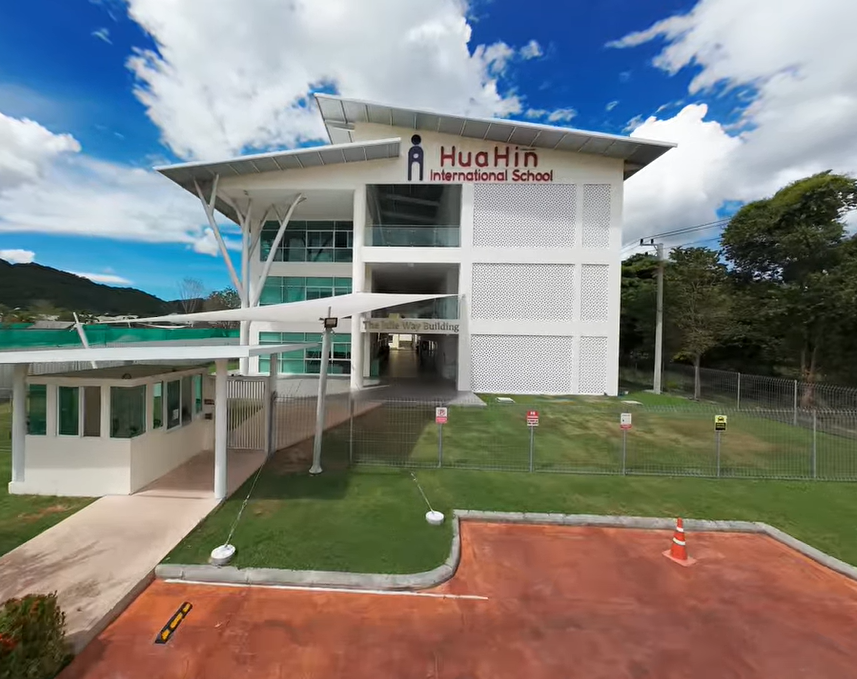
Community matters here too, and it is not only about numbers. Hua Hin’s expat population skews toward retirees and settled families, which produces a stable social base: the same people are still here in five years. Samui’s skews younger and more seasonal, which is livelier but means a higher turnover of friendships. Neither is better in the abstract, but families with school-age children usually value continuity.
Hua Hin also has an established Japanese community, which is unusual for a Thai beach town and is one of the reasons I built my business here. For a realistic picture of the daily rhythm rather than the brochure version, my piece on what life is really like in Hua Hin for expats is more useful than any comparison table.
Who should choose Koh Samui over Hua Hin?
Choose Koh Samui if beach quality is genuinely your first priority, if you want direct regional flights without routing through Bangkok, or if island life itself is the thing you are moving for. These are real advantages and Hua Hin cannot match them.
Samui’s beaches are not marginally better than ours, they are in a different category. Chaweng, Lamai, Maenam and Bophut are the kind of coastline people picture when they picture Thailand. Hua Hin’s beach is long, walkable and pleasant, but nobody moves to Hua Hin for the sand, and I would not pretend otherwise.
The airport is a genuine asset. Being able to reach Singapore, Kuala Lumpur or Hong Kong directly, without a domestic leg to Bangkok first, is worth real money and real hours to anyone who travels regularly for work or family.
There is also the intangible one. Some people want to live on an island, with the specific texture that brings: the sea on every side, the smaller scale, the sense of separation from the mainland. That is not a preference anyone can argue you out of, and if it describes you, Hua Hin will always feel like a compromise no matter how well it performs on cost and logistics.
Samui also has a deeper short-term rental market, driven by tourism. If your plan is to buy something that earns during high season and sits empty otherwise, that market is more mature than ours. My comparison of short-term versus long-term rental strategy explains why that distinction changes which property you should buy in the first place.
Which is the better long-term property decision?
They carry different risk profiles rather than one being better. Koh Samui is a mature, tourism-driven market with higher entry prices and income tied to visitor numbers. Hua Hin is a domestic and retiree-driven market with a lower entry point and steadier occupancy.
That difference has consequences. Tourism-linked markets move with airline capacity, global travel sentiment and events entirely outside Thailand. Retiree-linked markets move with pensions and demographics, which are slower and more predictable. Neither is safer in every scenario, but they fail in different ways, and one of those failure modes may suit your situation better than the other.
Hua Hin’s other structural feature is domestic demand. It has been the weekend coast for Bangkok since long before foreign buyers arrived, and that floor under the market does not depend on international tourism at all. Samui’s domestic weekend market is limited by the simple fact that you cannot drive there.
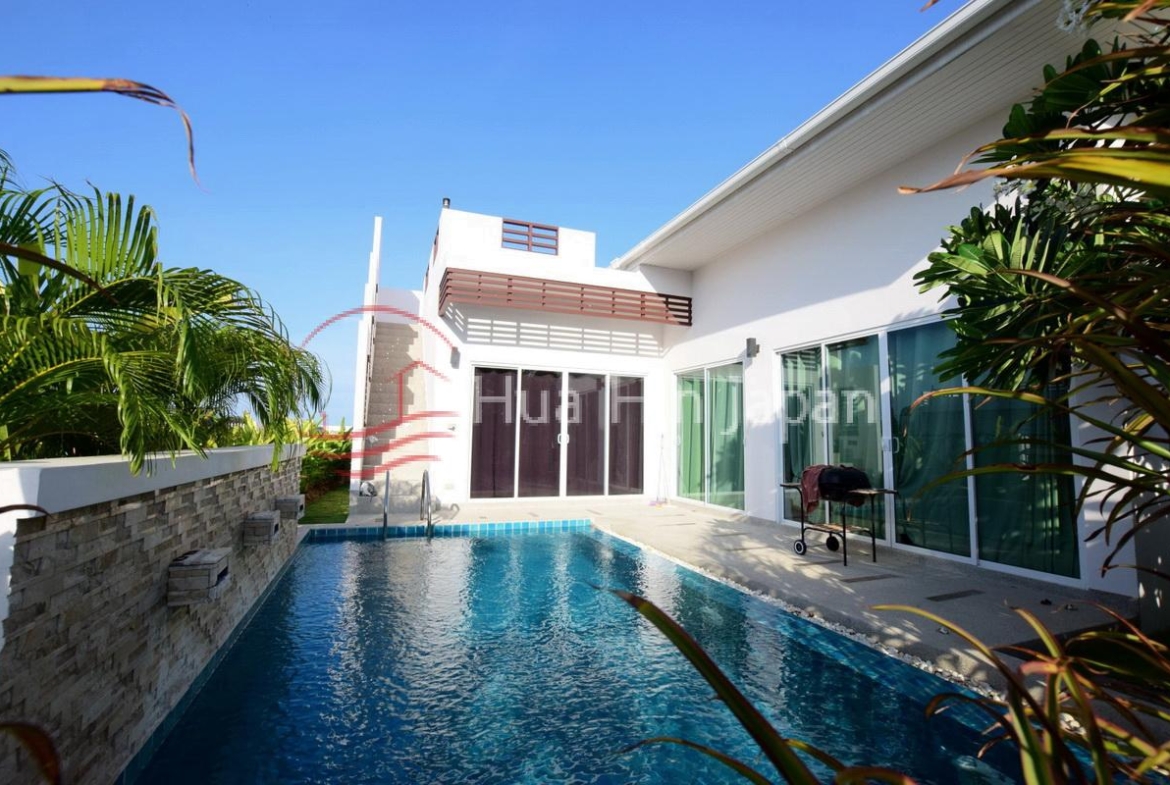
The practical point I would make to any investor is about tenancy rather than price. My agency has been working in this market since 2005, and the pattern that has held throughout is that retirees make unusually stable tenants. They are not chasing a season, they are not relocating for work, and once they have settled into a neighbourhood, found their hospital and made their friends, they tend to stay. That produces longer tenancies and fewer void periods than a holiday-let market, even when the headline yield looks less exciting on paper. I would rather manage a property with a quiet four-year tenant than one with a spectacular January and an empty June.
Before committing to either market, the groundwork matters more than the comparison. My Hua Hin property market report covers current conditions, what a 5M, 10M or 20M baht budget actually buys sets realistic expectations, and the choice between luxury villas and condos or townhouse and villa usually matters more to your return than which coast you picked.
Frequently asked questions
Can foreigners buy property in Hua Hin or Koh Samui? Foreigners can own condominium units outright in both places, subject to the national foreign ownership quota within each building. Land is treated differently, and my guide on whether you can own a house in Thailand explains the structures buyers actually use.
Is Hua Hin too quiet for younger expats? Midweek, Hua Hin is genuinely quiet, and people who need constant activity do notice it. It suits remote workers, families and anyone who wants a calm base with Bangkok two and a half hours away, rather than people looking for nightlife.
Can you live on 50,000 baht a month in Koh Samui? It is possible if you live inland, rent modestly and eat locally, but it is tighter on Samui than the same budget in Hua Hin. Most of the difference is rent and imported goods rather than lifestyle.
Which is safer during storm season? Neither is dangerous, but Hua Hin recovers faster because supplies and repair crews arrive by road rather than by ferry. Samui’s exposure is concentrated in the late-year northeast monsoon, roughly October to December.
Should I rent before I buy? Almost always yes, and ideally for a full season rather than a few weeks. Renting a pool villa in Hua Hin first lets you test neighbourhoods, commutes and noise before committing capital.
What should I check before signing on a Thai property? Title is the first thing, every time, and my walkthrough on how to check a Chanote title deed covers the verification most buyers skip. The buy or lease decision should be settled before you view anything, not after you have fallen for a property.
My honest conclusion
If you want the shortest possible version: Hua Hin is the practical choice and Koh Samui is the emotional one. I do not mean that as a criticism of either.
Hua Hin wins on cost, on access to Bangkok, on healthcare fallback, on family continuity and on year-round predictability. Koh Samui wins on beaches, on direct international flights and on the specific experience of living on an island. Almost every honest comparison I have had with a client reduces to those two lists.
The mistake I would most like you to avoid is deciding from a holiday. A holiday shows you a place at its best, in the month you chose to visit, without a hospital appointment, a school run, a rainy November or an immigration queue in it. Spend at least two weeks in each, in the month you would least want to be there, and the answer usually presents itself without much agonising. Clients who do this rarely change their minds afterwards. Clients who skip it sometimes sell within two years.
When you are ready to look seriously at the Hua Hin side, we have listings across Hua Hin and quieter Pranburi, and my team can arrange viewings and a stay so you can test the town properly before you commit. If this is your first move to Thailand, start with my guide to 7 things you must know before moving to Thailand.

 English
  Japanese
Join The Discussion